
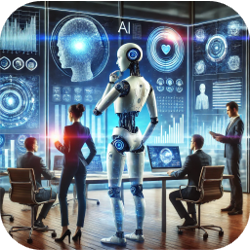
In today’s rapidly evolving business landscape, the integration of artificial intelligence (AI) into Human Resources (HR) is not just a possibility; it’s becoming a fait accompli. As organizations increasingly recognize the potential of AI to streamline processes, enhance decision-making, and ultimately drive better outcomes, HR departments are adopting a range of AI applications to transform their operations. This blog explores various AI implementations in HR that are revolutionizing the field.
1.Recruitment and Talent Acquisition
One of the most significant applications of AI in HR lies in recruitment. Traditional hiring processes can be time-consuming and prone to bias. AI-driven tools, such as applicant tracking systems (ATS), sift through thousands of resumes to identify the best candidates based on predetermined criteria. For instance, tools like HireVue utilize AI to analyse video interviews, assessing candidates’ facial expressions, tone of voice, and language use to gauge their fit for the role. This not only expedites the hiring process but also promotes a more objective evaluation.
2. Employee Onboarding
AI can significantly enhance the onboarding experience, making it smoother and more engaging for new hires. Chatbots, such as Talla, can provide instant answers to common questions about company policies, benefits, and procedures, reducing the burden on HR staff. Additionally, AI can tailor onboarding programs to individual employee needs, ensuring a more personalized experience that fosters engagement and retention from day one.
3. Employee Training and Development
Continuous learning is essential in today’s fast-paced work environment. AI-driven learning management systems (LMS) can analyse employees’ skills and performance data to recommend personalized training programs tailored to their specific needs. Platforms like Degreed leverage AI to curate content from various sources, providing employees with the most relevant learning opportunities. Moreover, through machine learning algorithms, these systems can assess training effectiveness and adjust programs accordingly.
4. Performance Management
Annual performance reviews are being reimagined with AI insights that facilitate ongoing feedback and development. Tools like Lattice and 15Five utilize AI to collect real-time performance data and employee feedback, allowing managers to make informed decisions about promotions, raises, and development opportunities. These platforms can identify high-performing employees and at-risk talent, helping HR proactively address retention challenges.
5. Employee Engagement and Retention
Understanding employee sentiment is vital for fostering a positive workplace culture. AI tools such as Culture Amp and Glint analyse employee feedback from surveys and other channels to provide insights into employee engagement levels. By employing natural language processing (NLP), these platforms can detect trends and underlying issues, enabling HR to implement targeted strategies to enhance employee satisfaction and retention.
6. Workforce Planning and Analytics
AI also plays a crucial role in workforce planning. Advanced analytics tools can help HR professionals anticipate staffing needs based on business trends, employee turnover rates, and performance metrics. Using predictive analytics, HR can devise strategic initiatives to address potential staffing gaps and shape workforce dynamics proactively.
The integration of AI in HR is proving to be transformative, ushering in an era of enhanced efficiency, engagement, and strategic decision-making. As organizations continue to embrace these technological advancements, they will not only streamline their HR operations but also cultivate a more dynamic and responsive workplace culture. The future of HR is undeniably intertwined with AI, marking a significant step towards creating a more intelligent and adaptive workforce. Embracing these innovations is no longer an option; it is a necessity.
Jorely Mathew
Chartered FCIPD, FCPHR, MBA, CHE, BHM, ACSTH – (ICF)